Investor Insight Series
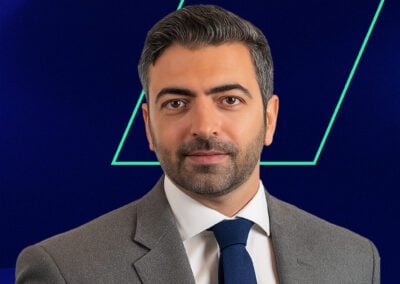
Interview with Dror Elkayam of L&G Asset Management
by Energy Council | October 28, 2025
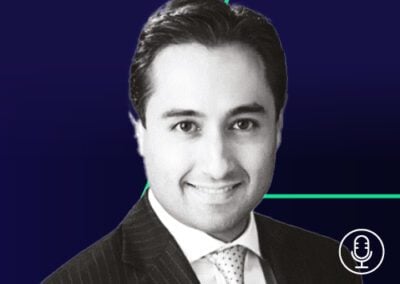
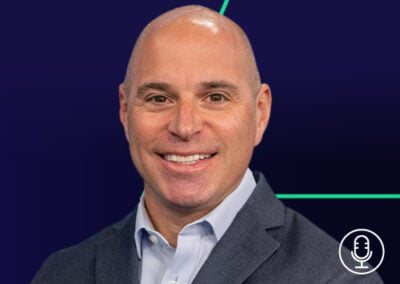
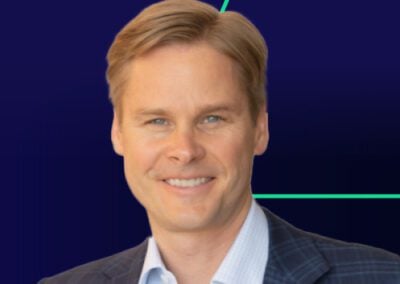
In this exlusive interview, Dror Elkayam, Senior Investment Manager at L&G Asset Management, speaks with Catherine Brown, the Energy Council’s Head of Investor Relations, about how one of the world’s largest asset managers is navigating a more complex, interconnected energy landscape. He explores the realities behind today’s investment decisions — from stewardship and governance to the tension between short-term returns and long-term transition goals. In a market where uncertainty is the only constant, their insights reveal what disciplined, forward-looking capital really looks like in 2026 and more.
“Increasingly, companies are focusing on opportunities with shorter lead times and projects that can start generating returns within a few years, rather than decades. At the same time, financial institutions are recalibrating their approach, with some pulling back from initiatives like the Net Zero Banking Alliance, reflecting that the trajectory today differs from where it was five years ago.”
Catherine Brown: As one of the world’s largest asset managers, L&G has significant influence over the companies it invests in. How do you engage with energy companies, and how does stewardship shape long-term investment outcomes?
Dror Elkayam: Our approach to stewardship has always been about safeguarding and growing our clients’ long‑term value by addressing financially material and systemic risks and opportunities. We focus on macro-level and systemic risks, not just company-specific issues, across relevant themes such as governance, climate and nature and social resilience. We manage approximately $1.2 trillion in assets, with substantial holdings in index-tracking vehicles. That means while we need to understand portfolio-level valuation drivers, we also take a bottom-up approach to individual companies where synergies and opportunities across their value chain are material to our sector and thematic objectives.
One of our core processes is the Climate Impact Pledge Programme. This evaluates a portfolio of 5,000 companies across 20 carbon-intensive sectors, not just traditional energy producers, but also downstream sectors like aviation, shipping, and aluminium smelting. We set clear expectations for each sector because risks and commitments in one part of the value chain can significantly affect companies elsewhere. For example, miscalculating decarbonization obligations or demand-supply assumptions can introduce substantial strategic risks.
We also closely monitor disclosure practices: are companies providing enough information to allow investors to understand mid to long-term risks, not only climate-related, but also other financially material risks, and how these translate into balance sheet liabilities? Over the past few years, we have worked with industry players and standard setters, including the IFRS and FASB, to promote more detailed, consistent frameworks across the industry.
Catherine Brown: The past few years have been turbulent for energy markets. What trends or shocks are shaping investment strategies today, and how are companies responding?
Dror Elkayam: The current market environment is overly complex. Over the last two to three years, some large companies have shifted from strong commitments to low-carbon capital allocation toward prioritisation of more traditional upstream energy projects. This is driven by several factors: geopolitical events such as Russia’s invasion of Ukraine, which led to elevated commodity prices generating significant cash flows; a shift in sentiment toward energy security and affordability; and the comparatively lower returns of some low-carbon projects relative to traditional upstream investments
Increasingly, companies are focusing on opportunities with shorter lead times and projects that can start generating returns within a few years, rather than decades. At the same time, financial institutions are recalibrating their approach, with some pulling back from initiatives like the Net Zero Banking Alliance, reflecting that the trajectory today differs from where it was five years ago.
Private equity and strategic partnerships are also playing a more important role. Companies are increasingly entering joint ventures or taking equity stakes in low-carbon projects they may not wish to operate directly, thus, mitigating transition-related risks with less constraints on their balance sheet, while maintaining exposure to growth opportunities and flexibility. We’re also seeing heavy investments in critical infrastructure and AI data centres, that link closely to natural gas demand, alongside renewable generation coming online to support these systems.
Catherine Brown: Where do you see overlooked opportunities across the energy value chain?
Dror Elkayam: Many opportunities remain untapped, in part because public markets tend to focus on two to three-year time horizons, whereas ‘long-term’ minded investors need to evaluate the ramifications of business resilience strategies over the next decade or two. This mismatch can pressure company valuations and create market inefficiencies.
We’ve also seen optimism around low-carbon technology adoption moderate in recent years. While there’s immense innovation and capital deployment, over $2 trillion invested in low-carbon technologies and grids last year alone, we are still short of the appx. $5–6 trillion needed for society to align with a 1.5°C pathway. Innovation remains the key driver, warranting cautious optimism. We need to acknowledge and navigate the short-term challenges, while remaining mindful of the long-term potential for significant economic and societal gains through the transition.
Catherine Brown: Looking ahead to the World Energy Capital Assembly, why do these conferences matter, and what value do they bring to major investors like L&G?
Dror Elkayam: The diversity of participants is invaluable, from lenders and investors to operators and data providers. These gatherings let us hear perspectives we don’t encounter every day, understand emerging challenges, and exchange ideas that can shape strategy.
For investors, it’s vital to remain humble about what we know and to continually learn from experts across the industry. Engaging in these conversations helps us assess sentiment across the market, which is essential for setting impactful, long-term investment objectives. Conferences like this are an invaluable forum to exchange ideas, gather intelligence, and ensure that our strategies remain informed and forward-looking.
Dror and team will be joining us at the upcoming World Energy Capital Assembly (WECA) in London this December 1 – 3. WECA brings together investors, operators, and energy leaders to explore opportunities ranging from traditional energy to the low-carbon transition. It provides a platform for participants to understand market dynamics, emerging risks, and investment strategies shaping the future of energy. Hear more from industry leaders and sign up to participate here.
Energy Council London
9-10 December 2026 | London
The meeting place for senior energy executives, investors and financiers to connect and do deals.